ULTRA Products by Boyut – exclusive European distribution by cromox®
The Anchors category covers ULTRA Anchors that are built around one core requirement: consistent holding in real conditions. Secure anchoring depends on more than anchor weight alone – geometry, weight distribution, and setting behaviour influence how quickly an anchor engages, how deeply it embeds, and how stable it remains when wind or tide changes.
A successful anchor selection should consider vessel type, key parameters (such as vessel weight and length), and the overall system arrangement at the bow, including how the anchor will be seated and recovered together with a matching swivel. Use the selection tables and main dimension documents provided on each product page to specify correctly.
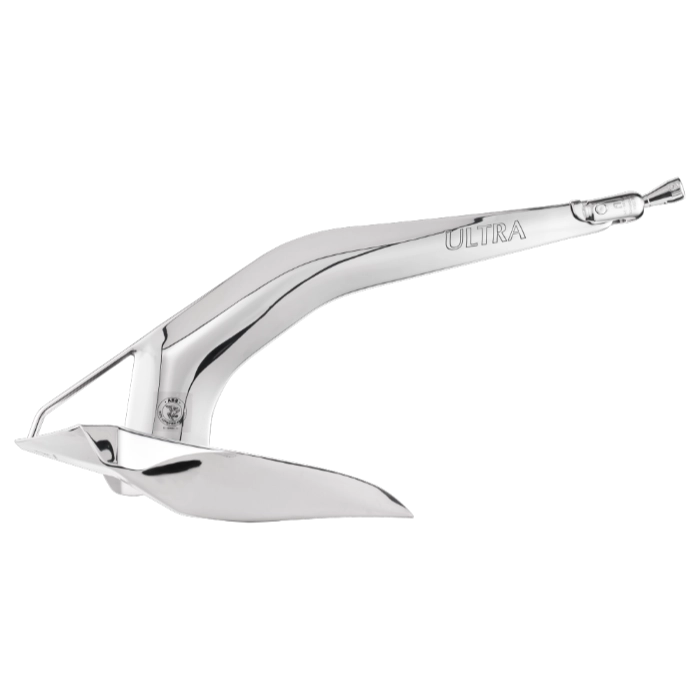
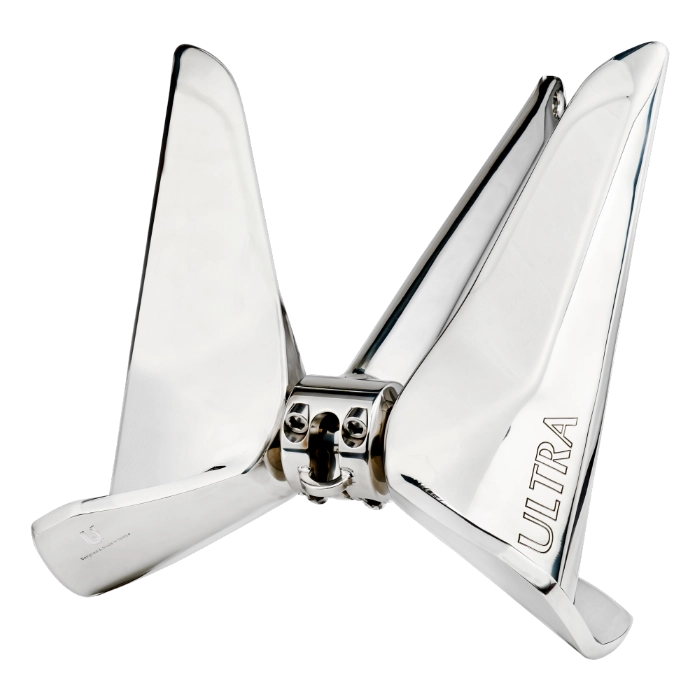
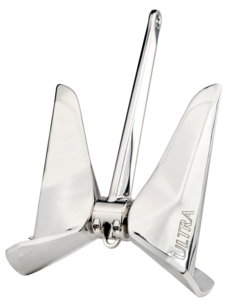
The ULTRA Anchor is a stainless-steel anchor engineered for fast setting, immediate holding, and stable behaviour under changing wind or tide. Optimised weight distribution helps the anchor recover into attack position, supporting consistent setting and reliable recovery. Patented design elements include a curved, lead-filled tip for rapid penetration, a hollow shank for balanced weight distribution, concave base surfaces for holding power, and side wing plates that help prevent release during load shifts. The range covers sizes from 5 kg to 360 kg.
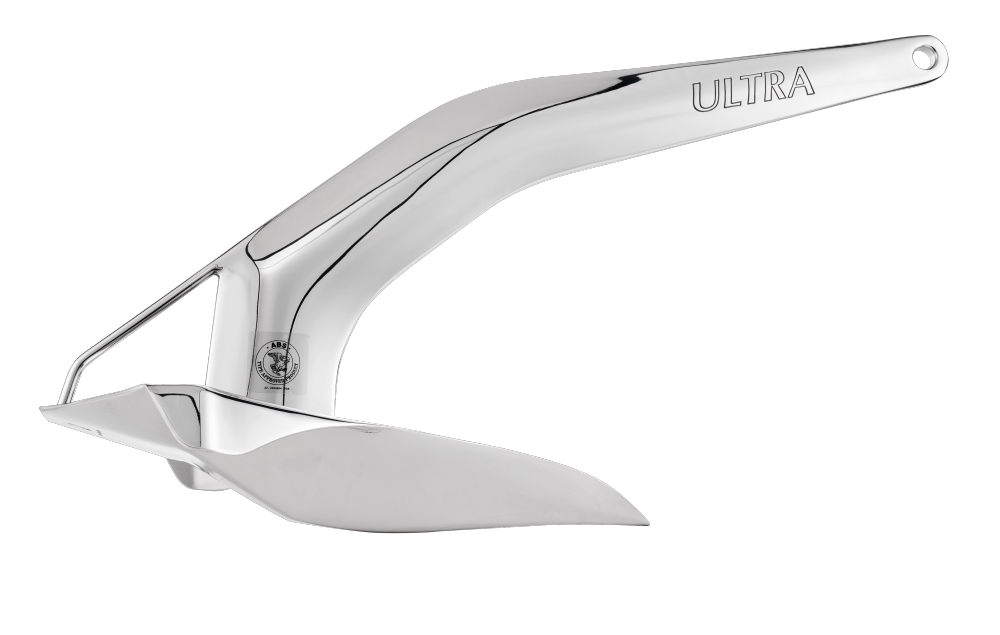
The ULTRA Side Pocket Anchor is a heavy-duty anchor designed to set quickly and hold securely across demanding seabed conditions. Thin front fluke tips support fast penetration, while the wide contact surface and strong fluke profile build high holding power once embedded. An angled shank is designed to slice into the seabed with minimal resistance for deeper engagement. A self-cleaning swivelling mechanism supports smooth operation over time without jamming. The anchor is available in Standard and Compact versions and covers 21 kg to 1500 kg.
An anchor’s holding performance depends on several factors, including its geometry, weight distribution, fluke design, penetration behaviour, and the seabed conditions. While anchor weight is important, modern anchor designs often rely on engineered shapes that promote faster setting and deeper embedding for improved holding power.
When wind or tide direction changes, an anchor may be subjected to shifting loads from different angles. Anchors designed to remain engaged during directional changes can help reduce the risk of dragging and support more stable holding over extended anchoring periods.
A standard anchor is typically designed for general-purpose anchoring and compatibility with a wide range of bow configurations. Side pocket anchors are often used on larger vessels and installations where the anchor is stored within a recessed pocket in the hull, requiring a specific geometry for deployment, retrieval, and stowage.
Anchor selection should be based on vessel length, displacement, operating area, and expected weather conditions. Manufacturers usually provide sizing charts that help match anchor models and weights to different vessel types to ensure reliable holding performance.
Stainless steel offers excellent corrosion resistance in marine environments and does not require galvanizing. In addition to its durability, stainless steel provides a smooth surface finish and can maintain its appearance and performance over many years of exposure to seawater.
Yes. The anchor should be considered as part of the complete anchoring system, including the chain, swivel, bow roller, and related hardware. Proper compatibility between these components helps ensure smooth deployment, reliable recovery, and consistent anchoring performance.
Any questions? Contact us!
We’re looking forward to your request.
Please complete all fields.

ULTRA Products by Boyut – exclusive European distribution by cromox®
General inquires per E-Mail: Alexander Schönberger | alex@ultra-cromox.com
Ketten Wälder GmbH | Im Gewerbegebiet 5 | 83093 Bad Endorf | Germany


